<sing-mul>
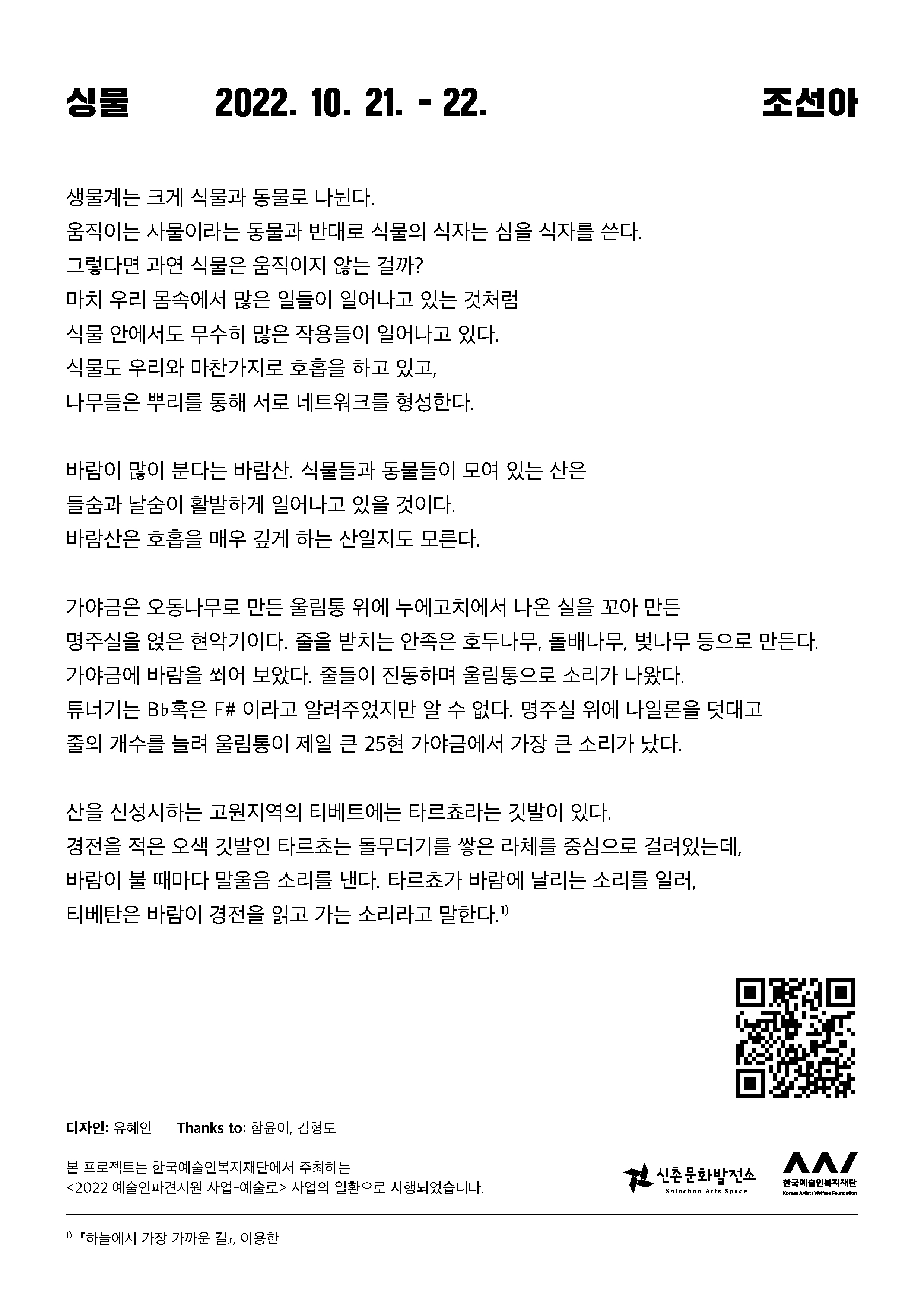
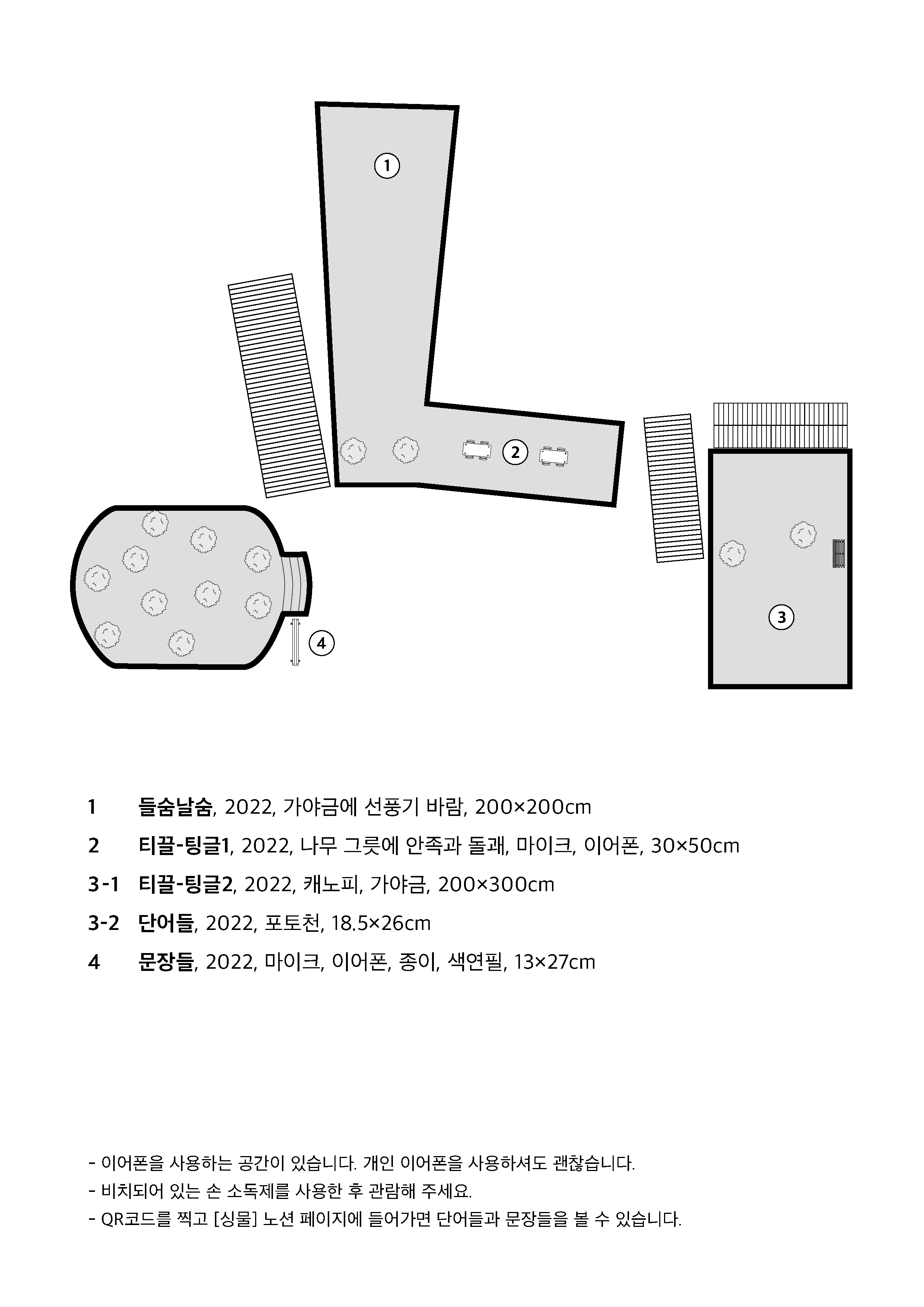
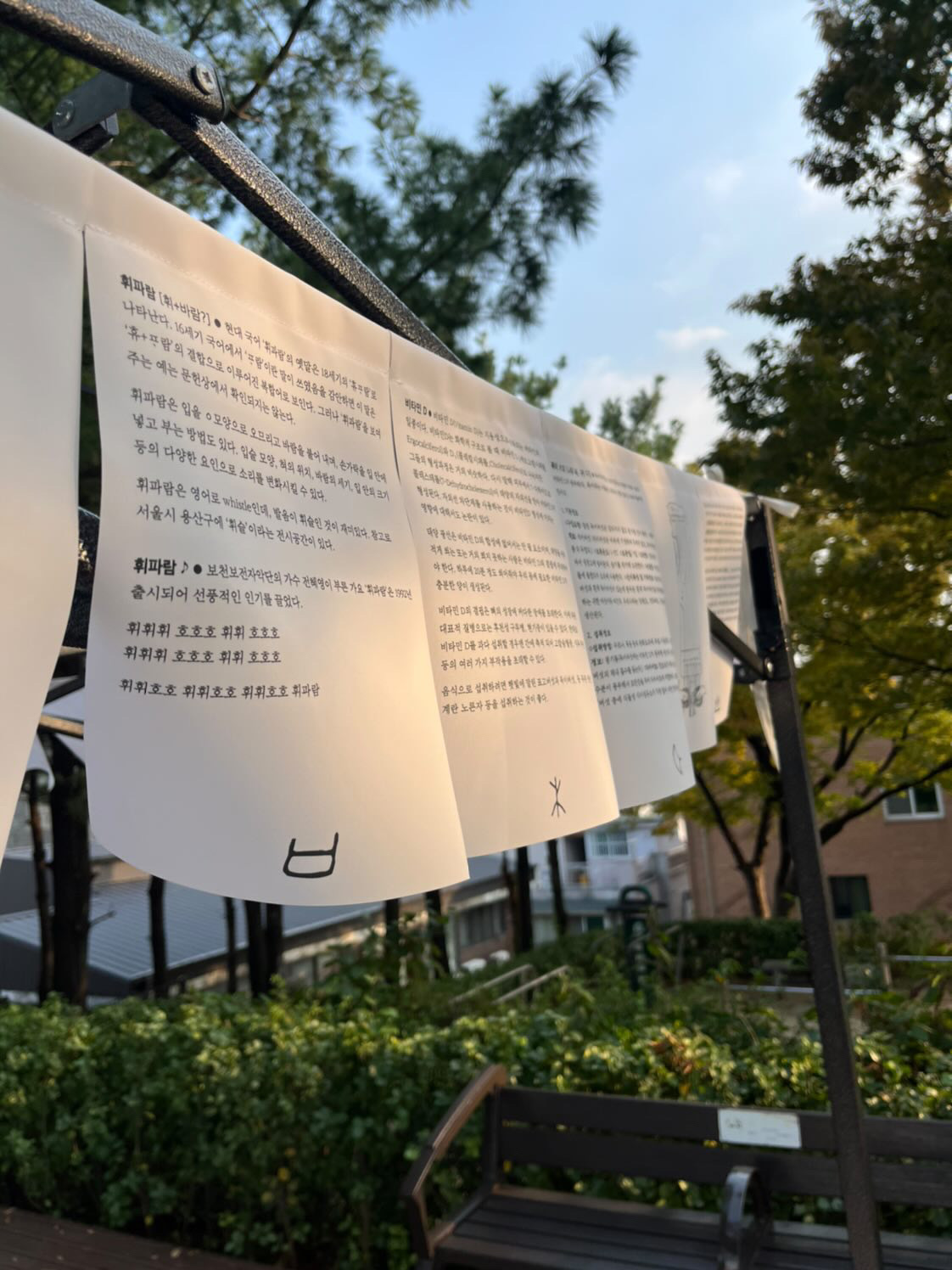
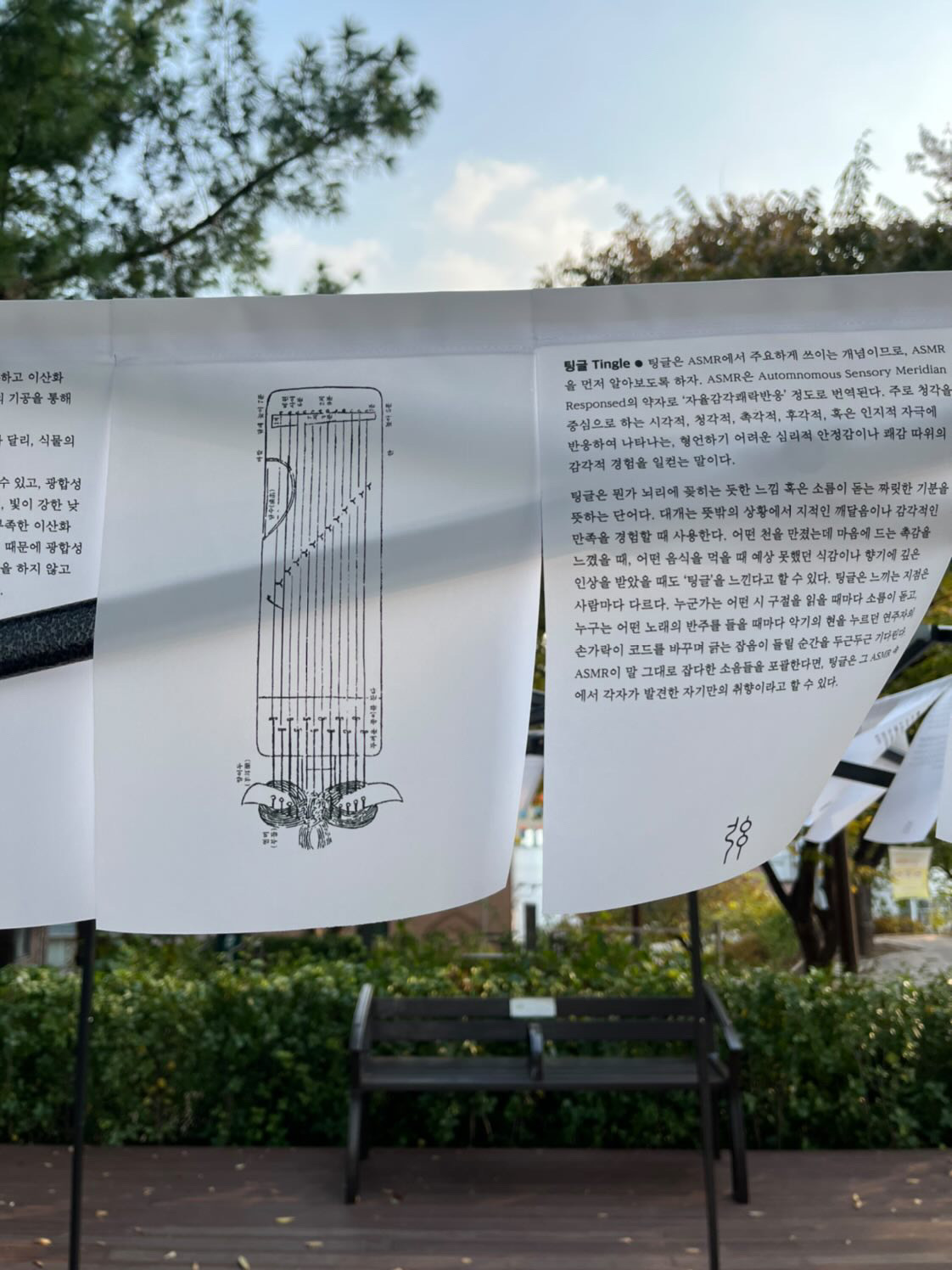
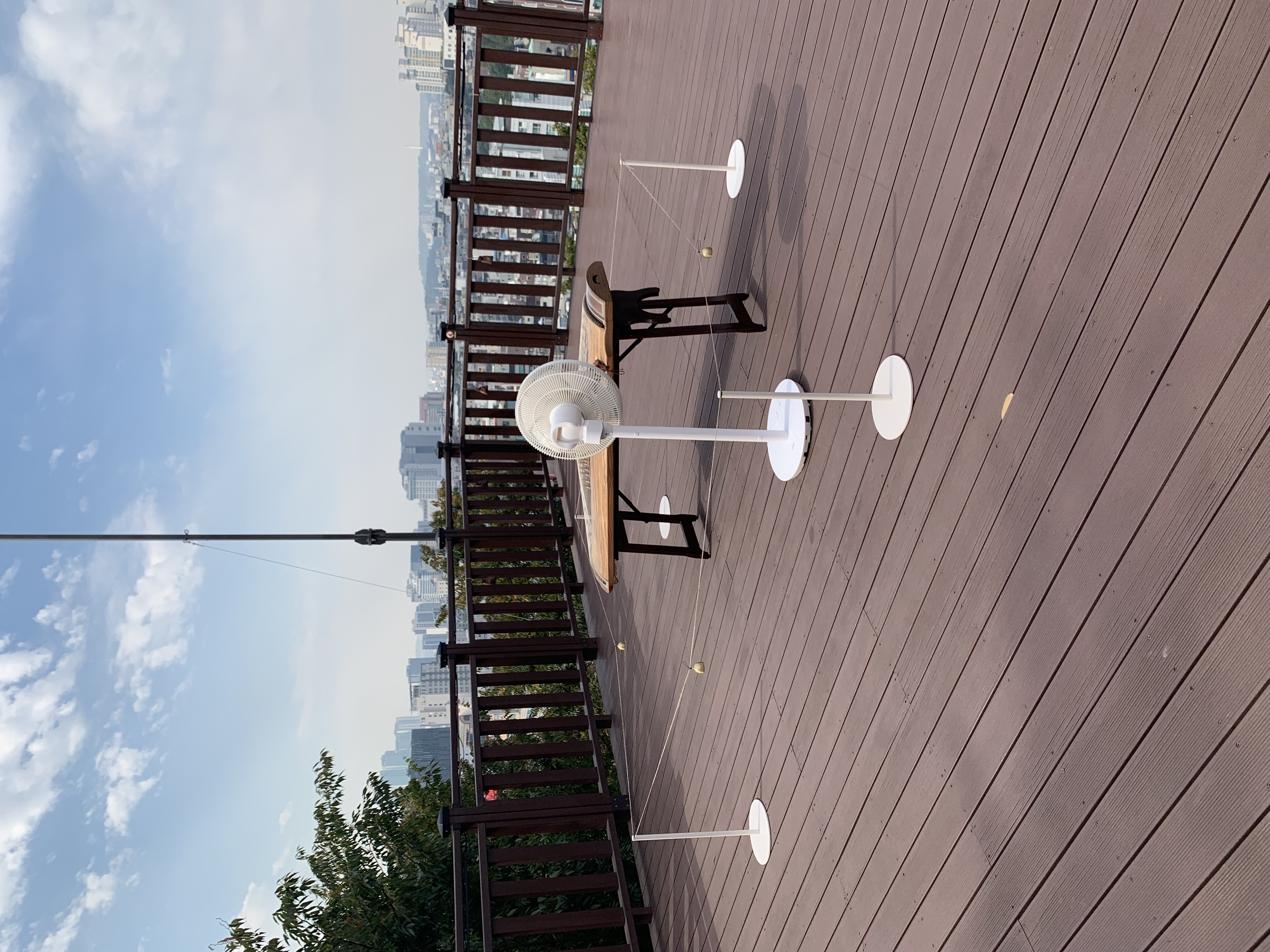
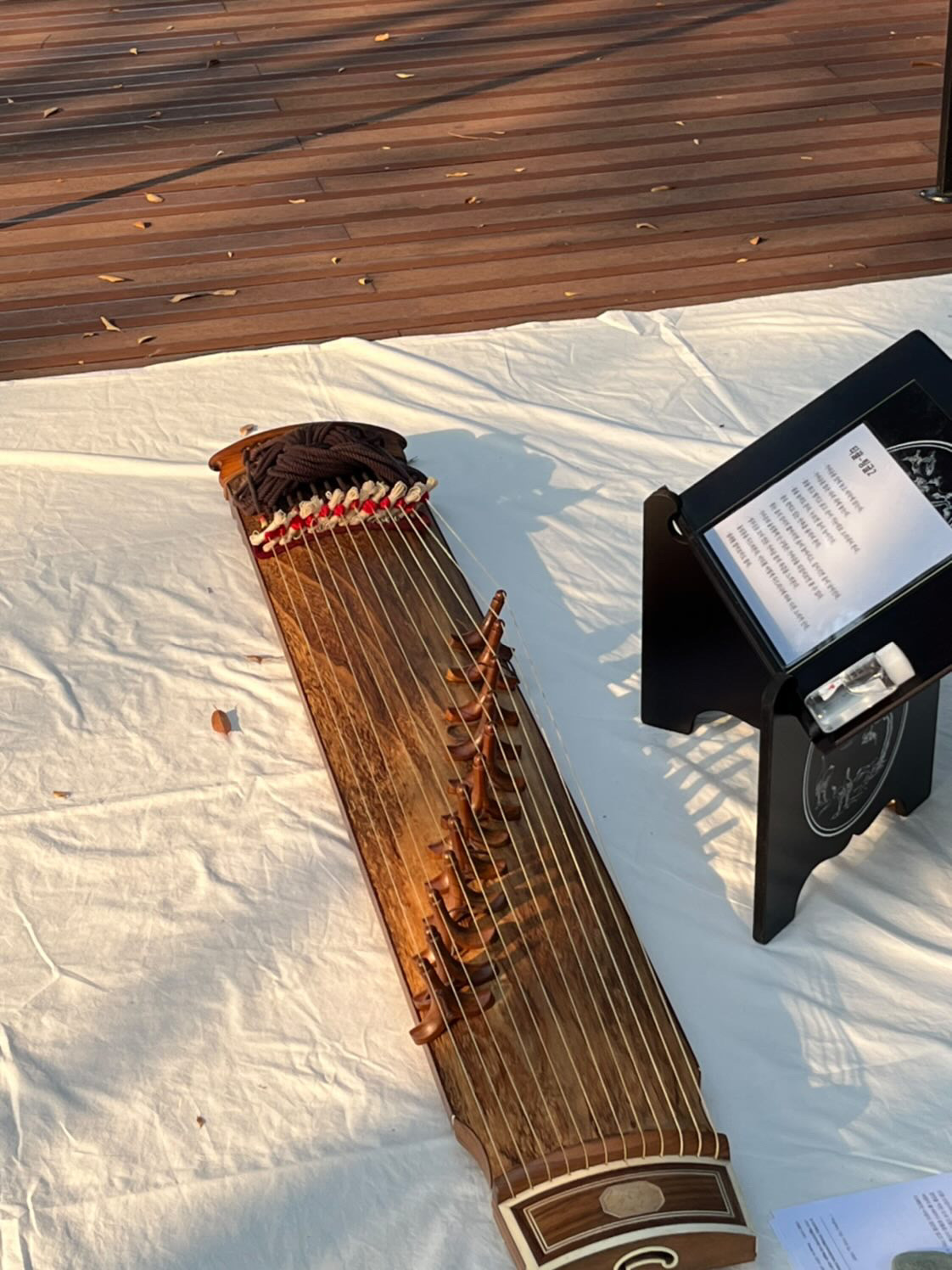
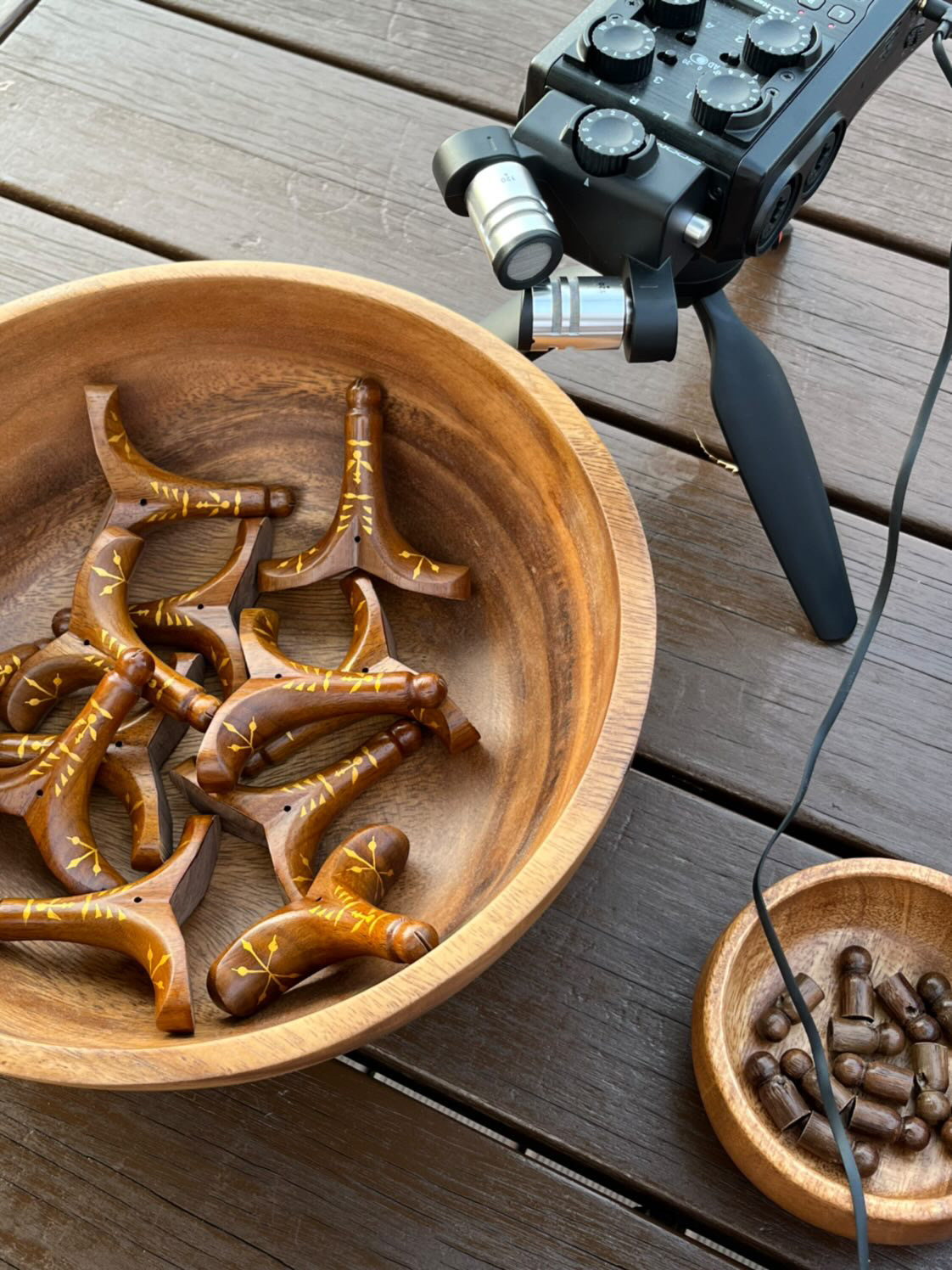
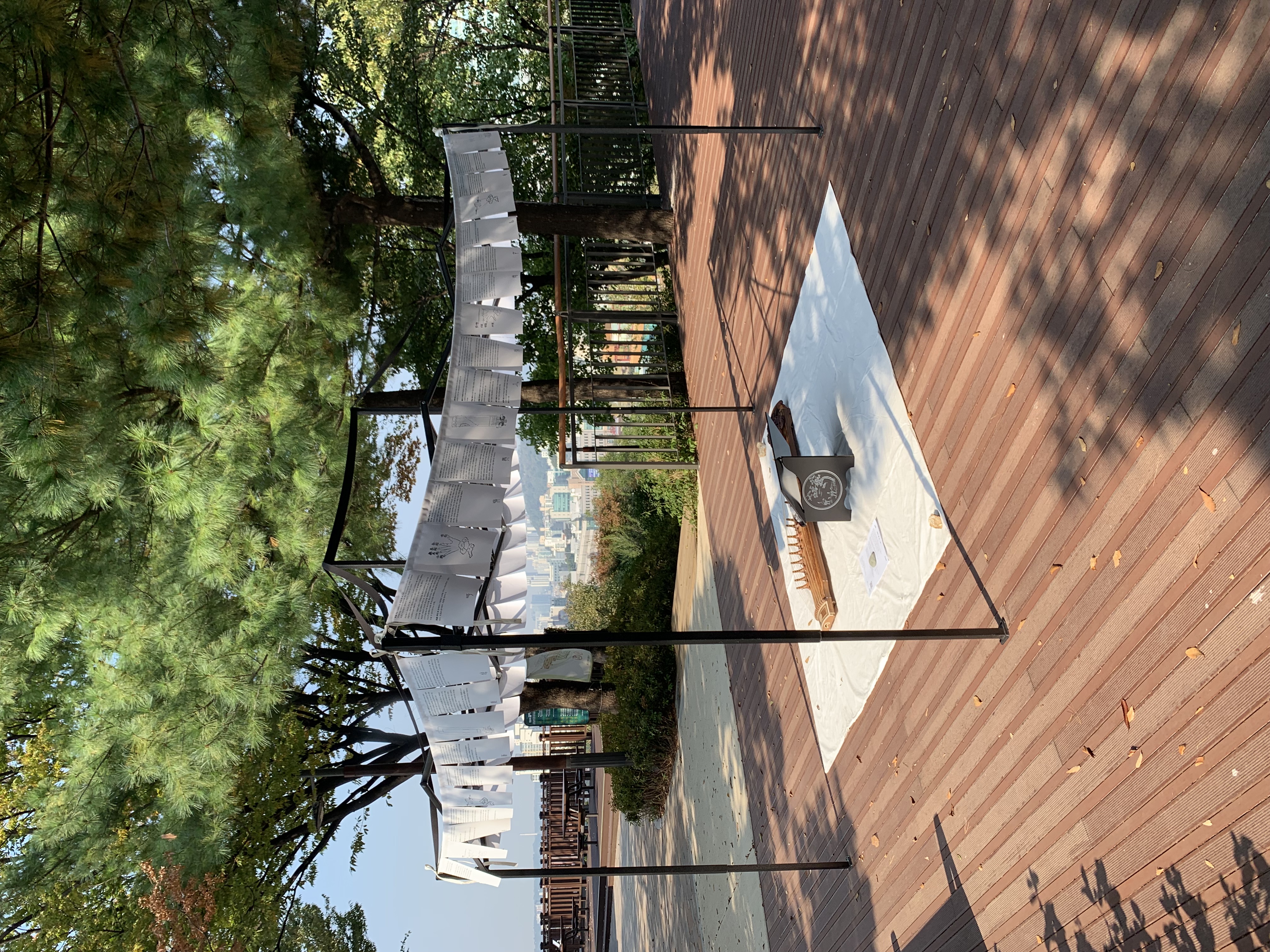
An outdoor soundscape installation created over six months of visiting Baramsan (literally “Wind Mountain”), located in Changcheon-dong, Seodaemun-gu, Seoul. Inspired by the themes of wind, mountain, and the dogs that frequent the mountain, words related to these were turned into small flag-like prayer banners (tarcho) and hung from a canopy. A gayageum was placed underneath, inviting visitors to make their own sounds with the instrument.
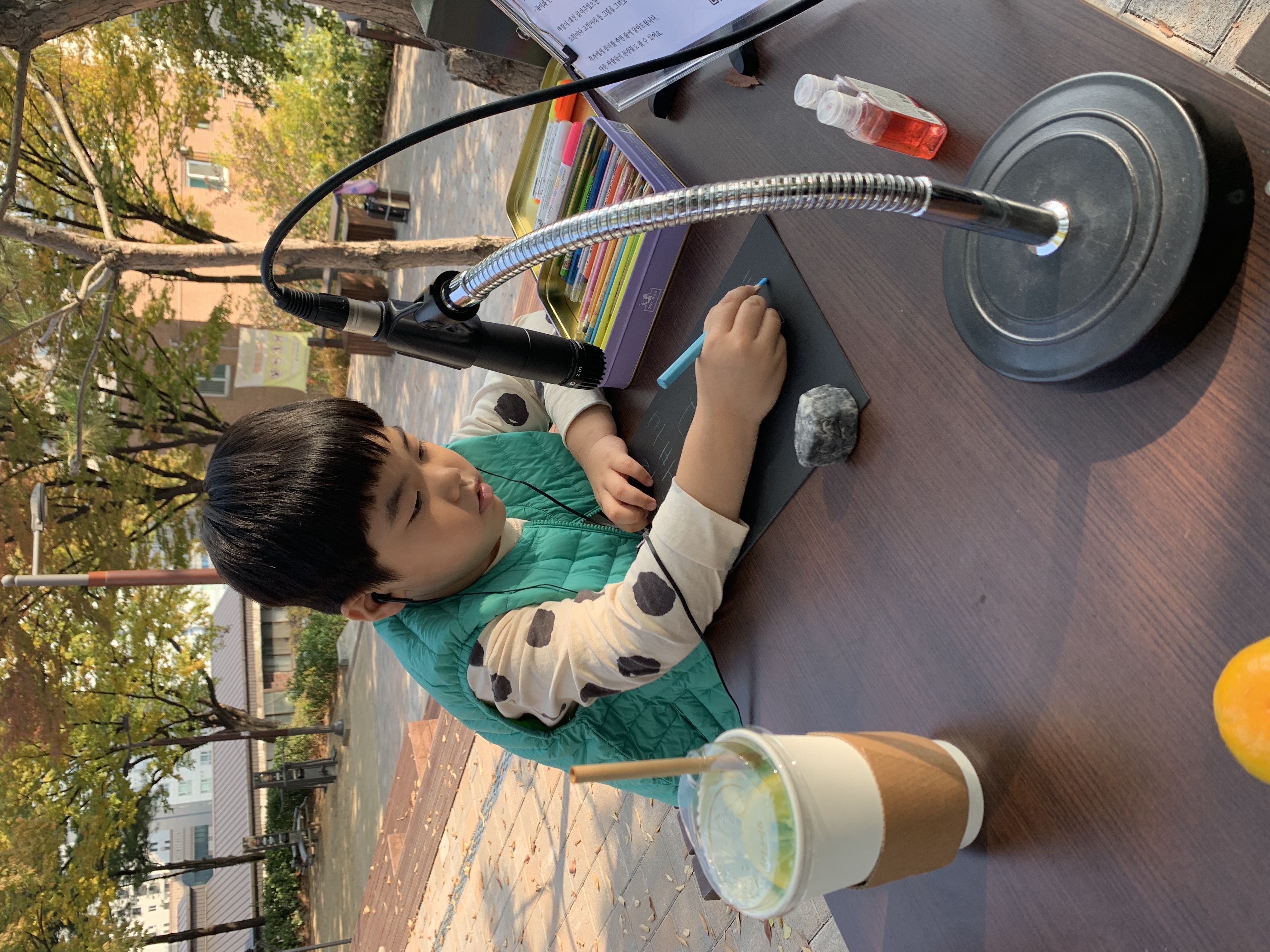
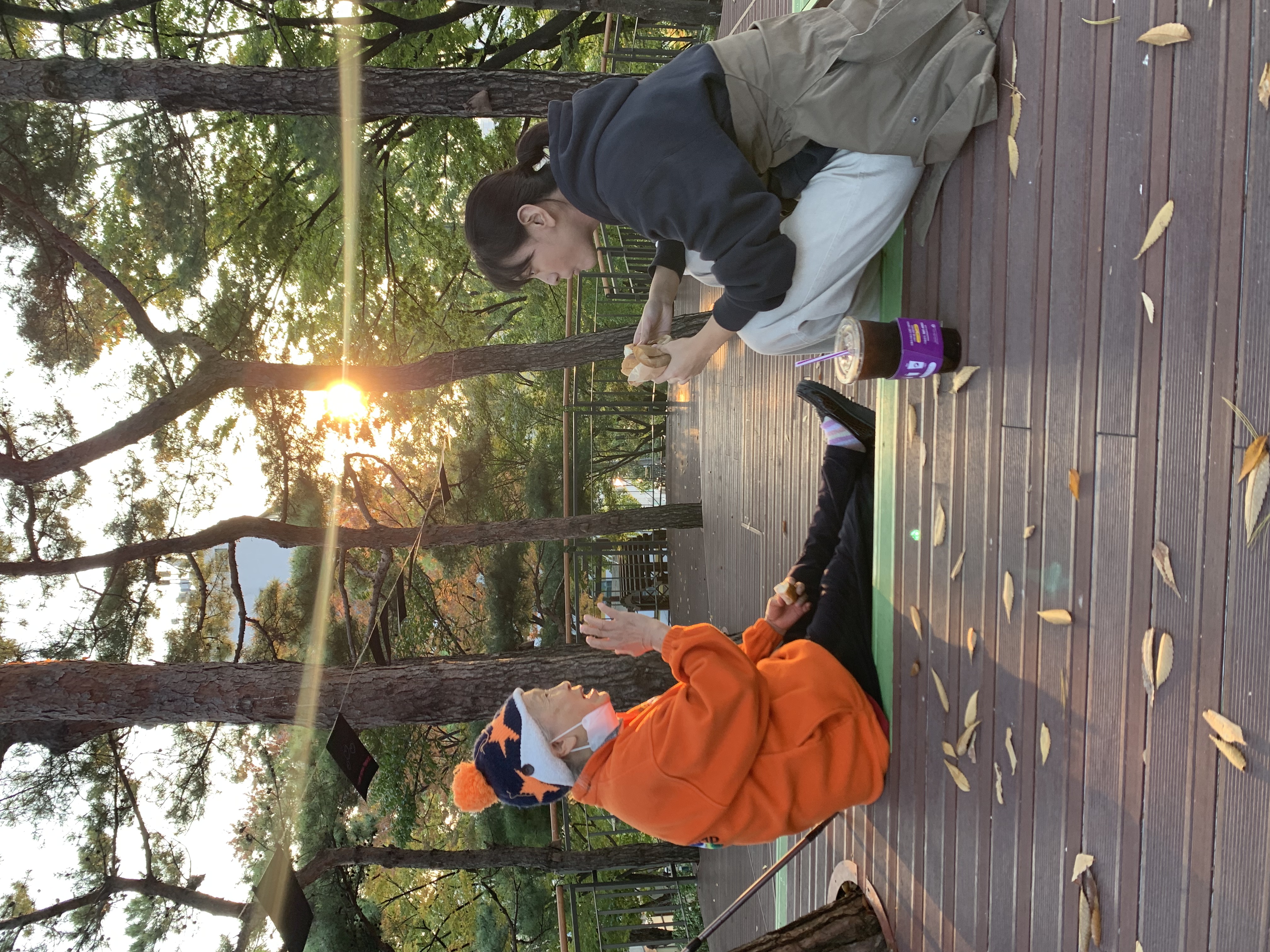
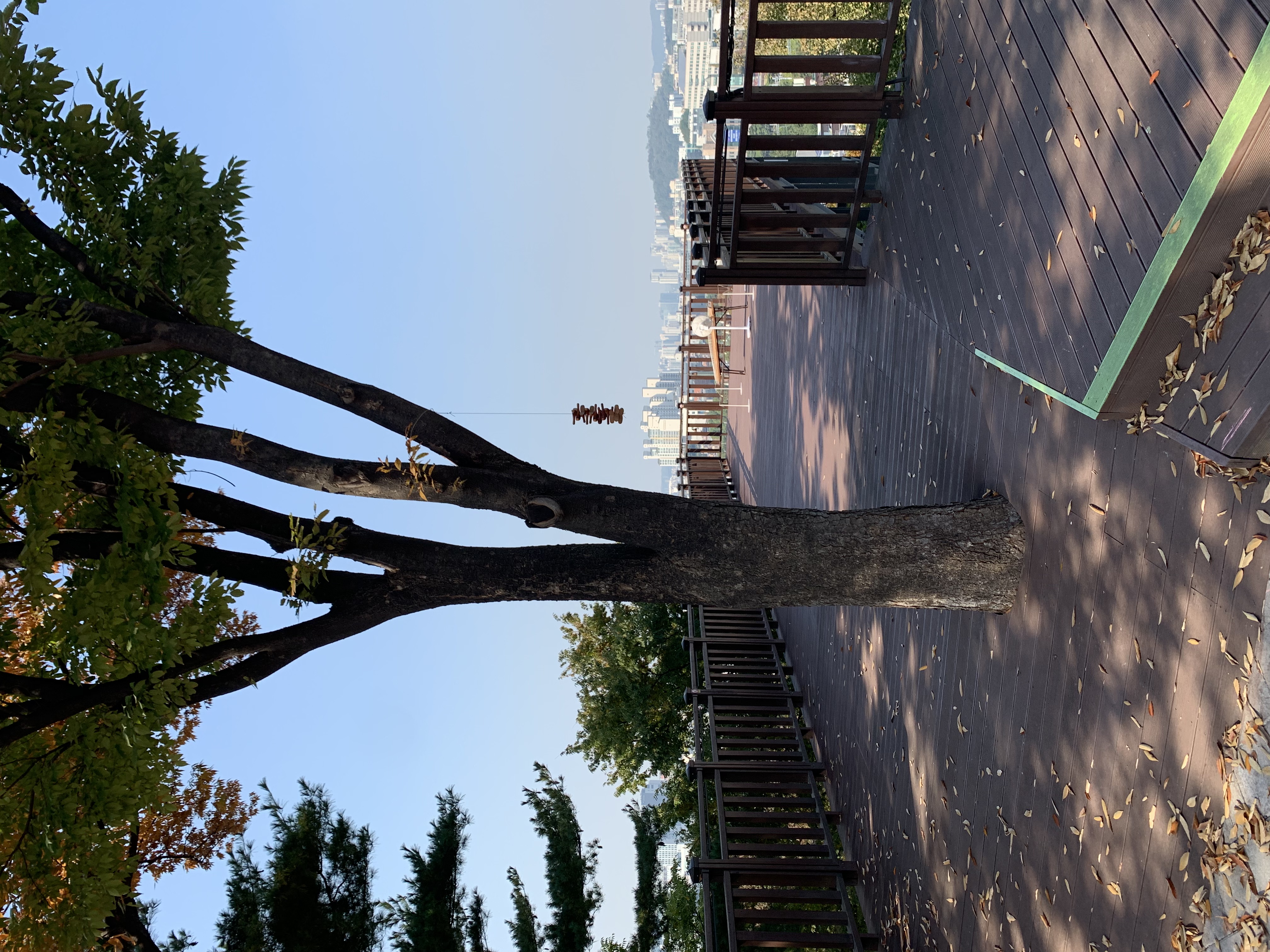
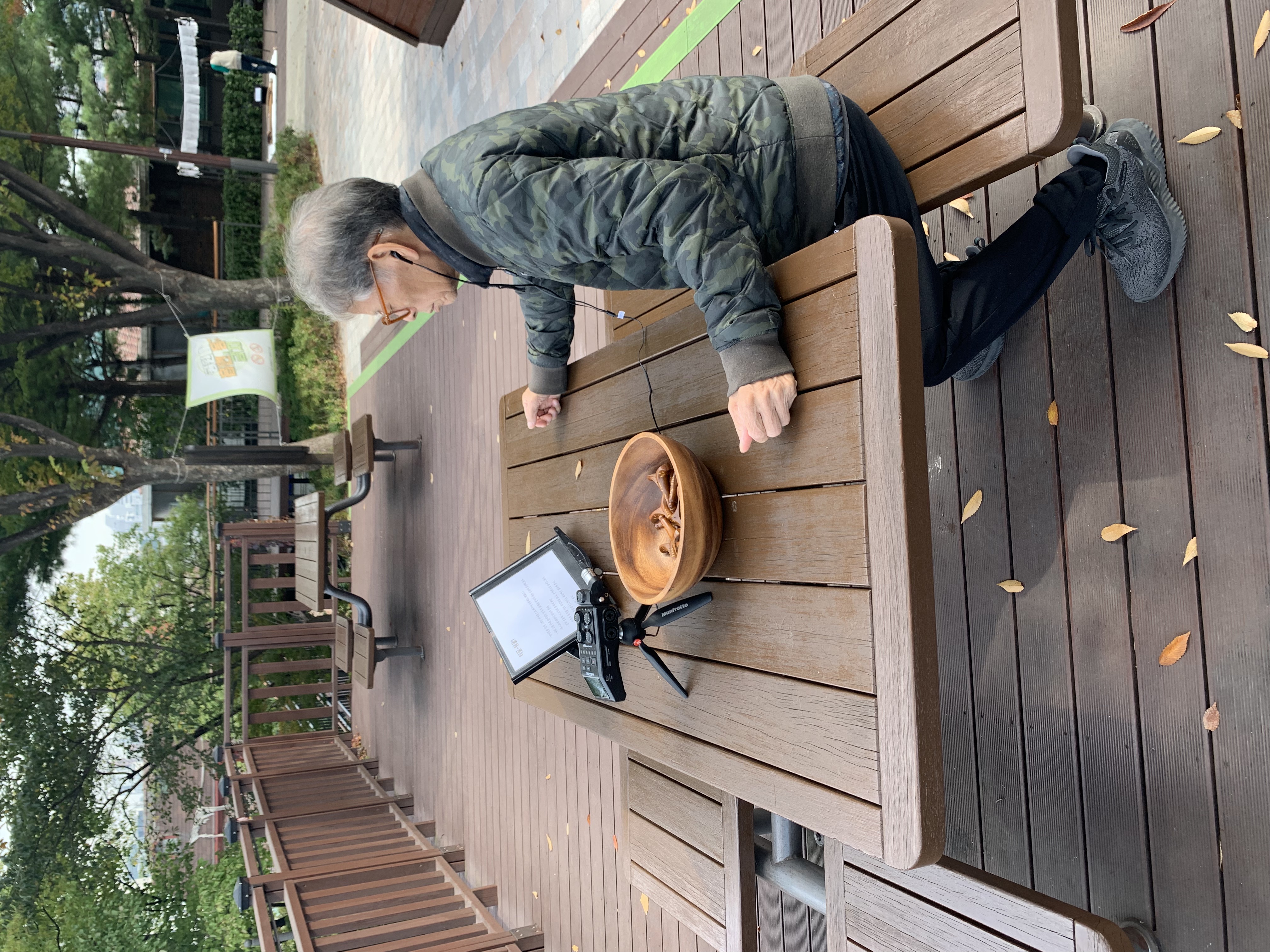
Viewers could also write down their wishes on paper while listening to the sound of their own writing, then turn them into tarcho and hang them up. As the tarcho gradually accumulated, they became part of the installation. On one side, a gayageum was installed to be played by the wind.
In biology, living things are divided into animals and plants. While animals are moving beings, the Chinese character for “plant” (植) means “to plant”—implying stillness. But are plants truly immobile?
Just as many unseen processes occur within our bodies, countless actions are happening inside plants. They breathe, and trees form networks through their roots.
The site, Baram Mountain (“Windy Mountain”), is a place where plants and trees gather. Inhalation and exhalation take place vividly here. Perhaps, this mountain breathes deeply.
In the Tibetan highlands, where mountains are regarded as sacred, there are prayer flags called tarcheo. These five-colored flags, inscribed with Buddhist scriptures, are often hung around lhatse—piles of stones marking sacred sites. When the wind blows, the tarcheo flutter and produce a sound resembling a horse’s neigh. Tibetans say that this sound is the wind reciting the scriptures as it passes by.(3)
(3) Yonghan Lee, The Closest Road to the Sky
☞Notion
☞Soundcloud
☞Youtube
interactive outdoor soundscape installation
Concept, Director, installation, Sound design
Selected work sponsored by Korean Artists Welfare Foundation
<싱물>
야외 사운드스케이프 전시로, 서울시 서대문구 창천동에 위치한 바람산에 6개월간 드나들며 제작한 작업이다. ‘바람’과 ‘산’, 그리고 바람산에 오는 개들 등등에 대한 단어를 깃발(타르쵸)로 제작하여 캐노피에 걸고, 그 아래 가야금을 놓아 관객들이 직접 가야금 소리를 내볼 수 있게 하였다. 그리고 관객은 자신이 종이에 소원을 써내려가는 소리를 들으며 타르쵸를 만들어 걸었고, 하나 둘 늘어가는 타르쵸를 볼 수 있었다. 한쪽에서는 바람에 울려 소리가 나는 가야금이 설치되어 있었다.
생물계는 크게 식물과 동물로 나뉜다. 움직이는 사물이라는 동물과 반대로, 식물의 식자는 심을 식자를 쓴다. 그렇다면 과연 식물은 움직이지 않는 걸까? 마치 우리 몸 속에서 많은 일들이 일어나고 있는 것처럼 식물도 안에서 무수히 많은 작용들이 일어나고 있다. 식물도 우리와 마찬가지로 호흡을 하고 있고, 나무들은 뿌리를 통해 서로 네트워크를 형성한다.
바람이 많이 분다는 바람산. 식물들과 나무들이 모여있는 산은 들숨과 날숨이 활발하게 일어나고 있을 것이다. 바람산은 호흡을 매우 깊게 하는 산일지도 모른다.
산을 신성시하는 고원지역의 티베트에는 타르쵸라는 깃발이 있다. 경전을 적은 오색 깃발인 타르쵸는 돌무더기를 쌓은 라체를 중심으로 걸려있는데, 바람이 불 때마다 말울음 소리를 낸다. 타르쵸가 바람에 날리는 소리를 일러, 티베탄은 바람이 경전을 읽고 가는 소리라고 말한다.(3)
(3) 이용한, 『하늘에서 가장 가까운길』
☞Notion
☞Soundcloud
☞Youtube
신촌문화발전소 및 바람산 일대
기획·설치·사운드 | 조선아
위 내용은 그룹전<바람이 머무는 자리>중 하나의 프로젝트로, 한국예술인복지재단에서 주최하는 2024년 예술로 협업사업의 일환으로 시행되었습니다.
An outdoor soundscape installation created over six months of visiting Baramsan (literally “Wind Mountain”), located in Changcheon-dong, Seodaemun-gu, Seoul. Inspired by the themes of wind, mountain, and the dogs that frequent the mountain, words related to these were turned into small flag-like prayer banners (tarcho) and hung from a canopy. A gayageum was placed underneath, inviting visitors to make their own sounds with the instrument.
Viewers could also write down their wishes on paper while listening to the sound of their own writing, then turn them into tarcho and hang them up. As the tarcho gradually accumulated, they became part of the installation. On one side, a gayageum was installed to be played by the wind.
In biology, living things are divided into animals and plants. While animals are moving beings, the Chinese character for “plant” (植) means “to plant”—implying stillness. But are plants truly immobile?
Just as many unseen processes occur within our bodies, countless actions are happening inside plants. They breathe, and trees form networks through their roots.
The site, Baram Mountain (“Windy Mountain”), is a place where plants and trees gather. Inhalation and exhalation take place vividly here. Perhaps, this mountain breathes deeply.
In the Tibetan highlands, where mountains are regarded as sacred, there are prayer flags called tarcheo. These five-colored flags, inscribed with Buddhist scriptures, are often hung around lhatse—piles of stones marking sacred sites. When the wind blows, the tarcheo flutter and produce a sound resembling a horse’s neigh. Tibetans say that this sound is the wind reciting the scriptures as it passes by.(3)
(3) Yonghan Lee, The Closest Road to the Sky
☞Notion
☞Soundcloud
☞Youtube
interactive outdoor soundscape installation
Concept, Director, installation, Sound design
Selected work sponsored by Korean Artists Welfare Foundation
<싱물>
야외 사운드스케이프 전시로, 서울시 서대문구 창천동에 위치한 바람산에 6개월간 드나들며 제작한 작업이다. ‘바람’과 ‘산’, 그리고 바람산에 오는 개들 등등에 대한 단어를 깃발(타르쵸)로 제작하여 캐노피에 걸고, 그 아래 가야금을 놓아 관객들이 직접 가야금 소리를 내볼 수 있게 하였다. 그리고 관객은 자신이 종이에 소원을 써내려가는 소리를 들으며 타르쵸를 만들어 걸었고, 하나 둘 늘어가는 타르쵸를 볼 수 있었다. 한쪽에서는 바람에 울려 소리가 나는 가야금이 설치되어 있었다.
생물계는 크게 식물과 동물로 나뉜다. 움직이는 사물이라는 동물과 반대로, 식물의 식자는 심을 식자를 쓴다. 그렇다면 과연 식물은 움직이지 않는 걸까? 마치 우리 몸 속에서 많은 일들이 일어나고 있는 것처럼 식물도 안에서 무수히 많은 작용들이 일어나고 있다. 식물도 우리와 마찬가지로 호흡을 하고 있고, 나무들은 뿌리를 통해 서로 네트워크를 형성한다.
바람이 많이 분다는 바람산. 식물들과 나무들이 모여있는 산은 들숨과 날숨이 활발하게 일어나고 있을 것이다. 바람산은 호흡을 매우 깊게 하는 산일지도 모른다.
산을 신성시하는 고원지역의 티베트에는 타르쵸라는 깃발이 있다. 경전을 적은 오색 깃발인 타르쵸는 돌무더기를 쌓은 라체를 중심으로 걸려있는데, 바람이 불 때마다 말울음 소리를 낸다. 타르쵸가 바람에 날리는 소리를 일러, 티베탄은 바람이 경전을 읽고 가는 소리라고 말한다.(3)
(3) 이용한, 『하늘에서 가장 가까운길』
☞Notion
☞Soundcloud
☞Youtube
신촌문화발전소 및 바람산 일대
기획·설치·사운드 | 조선아
위 내용은 그룹전<바람이 머무는 자리>중 하나의 프로젝트로, 한국예술인복지재단에서 주최하는 2024년 예술로 협업사업의 일환으로 시행되었습니다.